Weber Ford • Granite City • Greater St. Louis
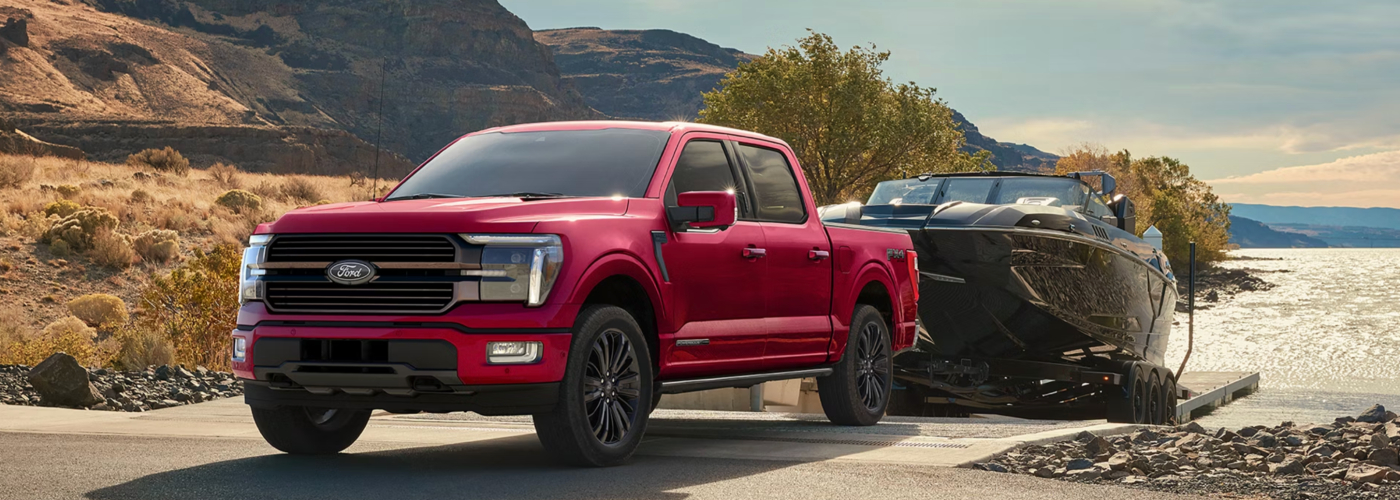
The 2026 Ford F-150 can tow up to 13,500 pounds in a properly equipped 3.5L EcoBoost configuration. The capacity of an individual truck depends on its complete build and load. Use the comparisons below to prepare a towing-focused visit to Weber Ford in the St. Louis area.
The figures below are maximum available references, not the towing rating of every truck with that engine. Ford’s current F-150 model page and 2026 towing guide require the appropriate equipment and configuration. Use a separate review for hybrid and specialty builds.
Up to 8,400 pounds when properly equipped. Compare the exact cab, drivetrain and axle configuration with your loaded trailer requirement.
Up to 13,500 pounds when properly equipped. The required Tow/Haul Package and Max Tow Axle upgrade must be confirmed on the qualifying build.
Up to 12,800 pounds when properly equipped. Engine preference should follow a comparison of the complete truck and its applicable towing chart.
PowerBoost has its own configuration-specific towing information. Request the rating for the actual model year, drivetrain, wheelbase, axle and equipment before choosing a trailer.
Ford’s 2026 guide lists up to 8,200 pounds for the 3.5L high-output Raptor and 8,700 for the 5.2L supercharged Raptor R, when properly equipped. Do not transfer the standard EcoBoost maximum to these trucks.
Ford identifies an XLT SuperCrew 4×4 with the 6.5-foot box, 3.5L EcoBoost engine, Tow/Haul Package and Max Tow Axle upgrade for the available maximum. Confirm the window sticker and build information of the actual truck before using that reference.
A similar-looking F-150 can have a different drivetrain, axle ratio, wheelbase or equipment package. Those differences matter even when the engine and trim badge match. The 2026 trim comparison helps with cabin and convenience choices after the towing configuration is identified.
Use loaded trailer weight, including equipment and cargo. For a camper, account for the supplies carried on the trip; for a work trailer, include the tools or machinery. An advertised empty weight leaves part of the job undefined.
Identify the hitch type and the load transferred to the truck. Conventional trailer, fifth-wheel and gooseneck charts are different. A conventional-towing maximum should not be reused as a fifth-wheel rating.
Keep the trailer’s own ratings and the installed hitch limits available. If reliable weights or specifications are missing, resolve those questions before committing to a vehicle. Our F-150 towing guide provides a broader planning checklist.
Passengers, cargo, accessories added after manufacture and the trailer’s load on the truck use available payload. Check the loading label and applicable axle limits on the selected F-150. Maximum towing and maximum payload are separate attributes and may require different configurations.
Illustrative calculation: a truck with a 1,700-pound occupant-and-cargo allowance has 950 pounds left after 750 pounds of people, cargo and added equipment. An 800-pound tongue load would leave 150 pounds within that allowance. These are example inputs; the truck, axle, combined-weight, hitch and trailer limits still need their own checks.
Review the F-150 payload guide with the actual vehicle details. Include the weight of newly installed hitch equipment when it is not already reflected in the vehicle’s allowance.
Ask for the factory package, axle information, hitch receiver rating, electrical connectors and brake-controller details. Then review aftermarket parts and any work still needed for your trailer. A receiver by itself does not establish the maximum configuration.
Ford’s 2026 guide specifies a weight-distribution system for conventional trailers above 5,000 pounds. Verify the vehicle, hitch and trailer instructions for the actual setup. Component ratings and installation requirements can limit the combination even when the engine reference is higher.
For a used or modified truck, inspect the current installation and records. Added suspension equipment or a larger receiver should not be treated as automatically raising the vehicle’s assigned ratings.
Available features such as Pro Trailer Backup Assist and Pro Trailer Hitch Assist support particular maneuvering tasks. Ask for a demonstration on the equipped truck and review the feature’s setup requirements and limitations.
Cameras, assistance features and onboard information do not increase the truck’s weight limits. The driver still needs a compatible, correctly loaded combination and control of the vehicle. Use the Ford trailer-technology guide to prepare feature questions.
Check technology by model year. Do not assign a feature advertised for a later F-150 to a 2026 truck without verification of the actual equipment and Ford instructions.
Compare rear-seat access, bed cargo, parking space and the time spent driving without a trailer. A truck that works for one towing trip also needs to fit ordinary use around the St. Louis area.
The bed-size guide and engine comparison address those decisions. More optional equipment can change vehicle weight, so keep checking the actual build as the shortlist changes.
If the verified F-150 candidates do not meet the loaded requirement, compare an appropriate Super Duty configuration using the same trailer information. The next model family still needs a complete rating review.
Choose a stock number from F-150 inventory and send the team the details that determine suitability.
No. That is an available maximum for a qualifying 3.5L EcoBoost configuration with required equipment. Use the exact truck’s applicable ratings.
No. The full hybrid uses its own configuration-specific information. Ask for the towing chart that matches the actual PowerBoost truck.
No. Raptor and Raptor R have separate figures and configurations in Ford’s 2026 towing guide.
Use the camper’s loaded weight and the load it transfers to the truck. People and cargo in the F-150 also affect the complete calculation.
Confirm the actual package contents, receiver, brake controller, electrical connection and trailer-specific hitch hardware. Some equipment may need a separate installation.
No. Assistance features help with defined tasks; they do not raise weight ratings or replace proper loading and compatible equipment.
Contact Weber Ford in Granite City with your trailer details and the stock numbers of interest. Confirm availability and the records to review before you travel.
Weber Ford is located at 3465 Progress Parkway, Granite City, IL 62040. Call 618-452-5400 or contact the team with your loaded-trailer information, passenger needs and preferred cab. We can help gather the details for the actual trucks on your shortlist.