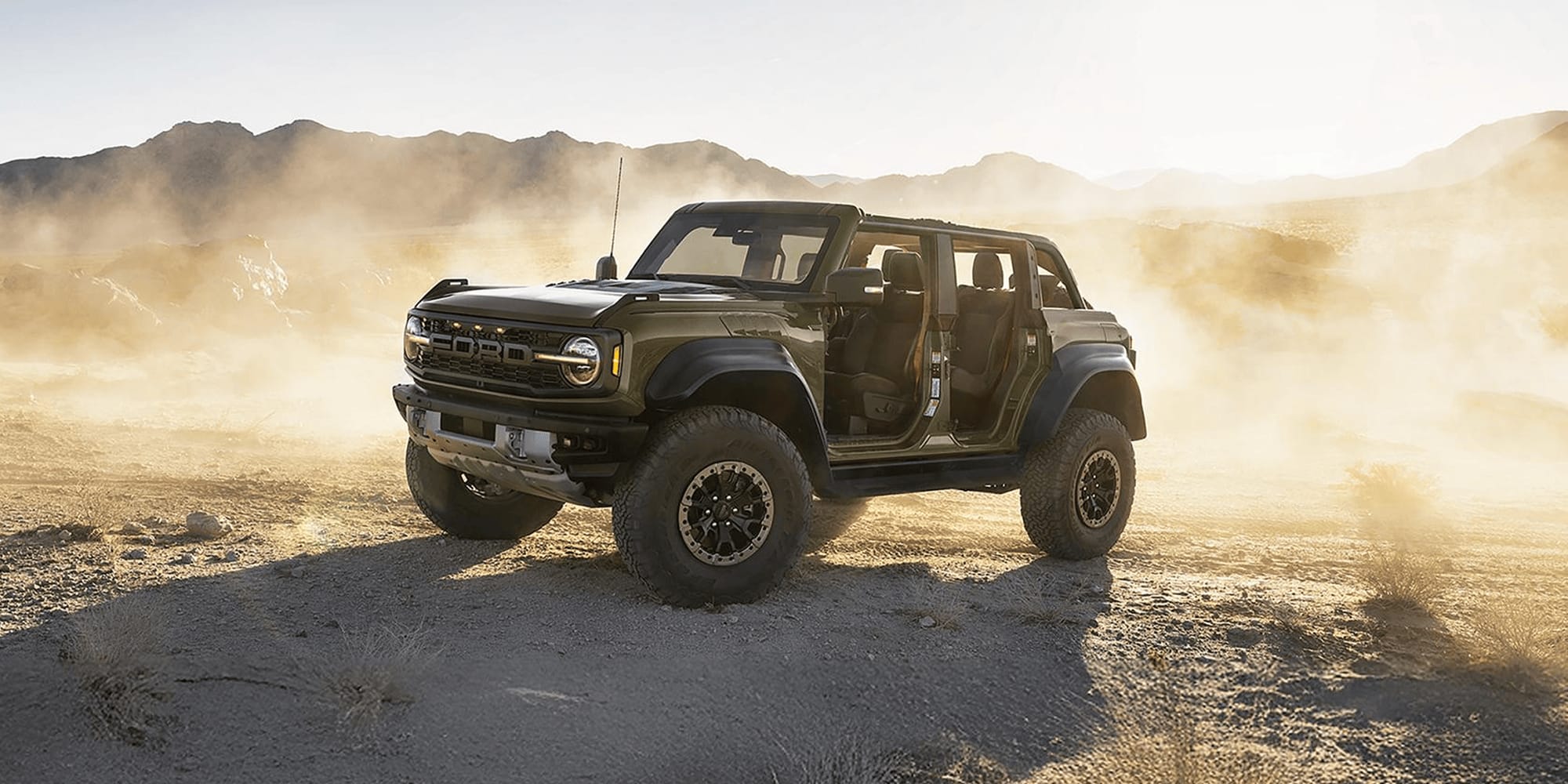
2026 Bronco interior research • Weber Ford • Granite City
A 2026 Bronco interior comparison starts with the passengers and gear that travel with you. Two doors or four, hardtop or soft top, and the actual seating equipment all affect the decision. Use the listings and the configuration tables below to prepare a focused cabin demonstration at Weber Ford near St. Louis.
Ford’s 2026 Bronco technical specifications publish different figures for these body-and-roof configurations. The table describes the ordinary configurations shown in that reference. It should not be used as a universal figure for every special trim or accessory setup.
| Body and roof | Seats | Behind rear row | Behind front row |
|---|---|---|---|
| Two-door hardtop | 4 | 20.6 cu ft | 52.0 cu ft |
| Four-door hardtop | 5 | 35.6 cu ft | 77.6 cu ft |
| Four-door soft top | 5 | 38.3 cu ft | 83.0 cu ft |
The space behind the rear row matters when those passenger positions stay occupied. The larger figure behind the front row describes a different seat arrangement. It cannot answer how much luggage fits while all the seats you need remain in use.
Ford separately lists 72.9 cubic feet behind the first row for Raptor in the hardtop column. That is one example of why the largest ordinary-Bronco number should not be assigned to every trim. Check the exact 2026 vehicle and its roof before comparing figures.
Volume also does not tell you the shape of the opening. Measure the width and height needed by a stroller, cooler, crate or other decisive item, then test the usable loading path and floor on the selected Bronco. Account for any installed cargo drawer, security enclosure or other accessory.
The reviewed Ford reference gives 43.1 inches of front legroom. Rear legroom is 35.7 inches in the two-door configuration and 36.3 inches in the four-door configuration. Those dimensions are useful starting points, but they do not replace sitting in the vehicle.
Set the front seats for the people who normally drive before assessing the back. For a two-door, try the complete movement needed to reach the rear seat. For a four-door, check the door opening and the space needed beside the vehicle. A small parking space can affect access even when the cabin itself fits.
If children ride with you, bring the relevant restraint and follow both the vehicle and restraint instructions. Four or five seating positions do not guarantee that a particular combination of child seats fits correctly. Evaluate buckle access, entry and the items carried alongside the passengers.
Ask which roof components, storage bags, tools and related hardware are included with the specific vehicle. On a used example, inspect them rather than assuming every original accessory is still present. Confirm any added roof equipment separately from the factory window sticker.
Choose around how you will actually use and store removable components. A demonstration should cover the prescribed handling, storage and reinstallation process. Think about who will handle the components and the space available at home. Follow the correct Ford owner information for the selected body and roof.
For everyday comfort, include normal wind and road noise in a suitable test drive. For a rack or roof-mounted accessory, ask about compatible hardware and the applicable roof-load instructions. A parked load reference and an in-motion load reference are different requirements.
Compare the actual upholstery, flooring, storage and floor-mat retention in the vehicle. Trail-oriented equipment and removable roof panels do not make all cabin materials or electronics waterproof. Ask which cleaning procedures apply to the installed trim and flooring.
Check where wet gear, work items and everyday bags would travel without blocking controls or interfering with passengers. Keep the pedal area clear and verify that floor accessories fit the selected body and flooring. The Parts Center can help with a fitment question before an accessory is purchased.
For a used Bronco, look for wear or damage around removable panels, seals, seat mechanisms and added accessories. Discuss available service records and the written coverage terms rather than assuming a model year establishes condition.
While parked, try the phone connection, display controls, camera views and the storage you use most often. Check which features are installed and which require activation or a subscription. A photograph or trim name should not substitute for an equipment demonstration.
Use the 2026 Bronco trim comparison to narrow the equipment choices after the body and roof decision. Bronco Sport is a separate model with its own cabin and dimensions; do not transfer this table to it. Driver-assistance features support an attentive driver and have operating limits.
Choose one or two stock numbers, then explain the passenger or cargo question that could change the purchase. A request such as “four doors, hardtop, two rear passengers and this crate size” gives the team a more useful starting point than asking for the largest interior.
No. Ford’s two-door reference has four seats; the four-door reference has five. Check the actual vehicle and passenger-restraint arrangement.
No. The 83.0-cubic-foot reference is behind the front row for the ordinary four-door soft-top configuration. Roof, trim and seat position matter.
Compare the complete configuration with the seats you will use. Load your important items and consider roof handling, storage and everyday comfort together.
Use that vehicle’s own year, trim and roof specifications. This guide is explicitly for 2026; current inventory can include other years.
Visit Weber Ford at 3465 Progress Parkway, Granite City, IL 62040. Call 618-452-5400 or send the stock number and cabin questions before traveling from St. Louis so the team can confirm availability and prepare the comparison.


