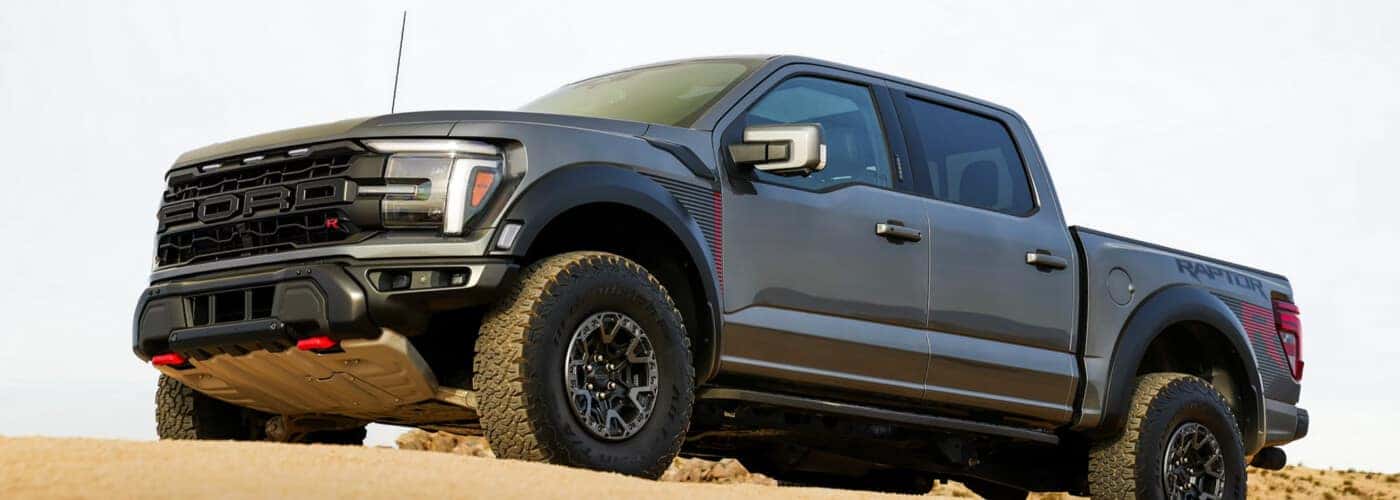
2026 truck comparison • Weber Ford • Granite City
The 2026 Ford F-150 offers more powertrain and cab choices, while the Toyota Tundra gives shoppers its own gasoline and full-hybrid configurations. A useful comparison matches the job, passengers, bed and equipment before comparing price. Use the differences below to prepare an F-150 shortlist at Weber Ford near St. Louis and evaluate it against a specific Tundra.
| Decision | 2026 Ford F-150 | 2026 Toyota Tundra |
|---|---|---|
| Powertrain direction | EcoBoost V6, 5.0L V8 and PowerBoost full-hybrid choices; separate Raptor engines. | i-FORCE twin-turbo V6 and i-FORCE MAX full hybrid. |
| Cab choice | Regular Cab, SuperCab and SuperCrew across the lineup. | Double Cab and CrewMax configurations. |
| Published maximum towing | 13,500 lb with a qualifying 3.5L EcoBoost configuration. | 12,000 lb with a qualifying configuration. |
| Hybrid comparison | PowerBoost; available onboard-power equipment varies by truck. | i-FORCE MAX; 437 hp and 583 lb-ft published combined output. |
| How to make the decision | Select the actual cab, bed, engine and installed equipment. | Select the actual cab, bed, powertrain and installed equipment. |
Ford’s 2026 F-150 towing guide lists a 13,500-pound maximum for the appropriate 3.5L EcoBoost configuration with required equipment. Toyota publishes a 12,000-pound maximum for a properly equipped 2026 Tundra. The difference between those lineup maxima is 1,500 pounds.
That does not mean any F-150 can tow 1,500 pounds more than any Tundra. Cab, bed, drivetrain, axle, equipment and loaded vehicle weight affect the actual result. A Raptor power figure, a PowerBoost towing figure and another F-150’s payload maximum do not describe one truck.
For either candidate, review the loaded trailer and its tongue or pin load, then account for passengers, cargo and accessories. Check truck, axle, tire, hitch and combined-weight limits. A trailer that is within an advertised towing maximum can still exceed another applicable limit.
Use the F-150 towing research to organize questions, then use the exact 2026 selector row and the vehicle’s labels for the purchase.
Ford PowerBoost and Toyota i-FORCE MAX both combine a gasoline engine with electric assistance. Neither is a plug-in hybrid requiring an external charging routine. Their names do not establish an identical driving experience or the same fuel-cost result.
Toyota’s 2026 announcement lists 437 combined horsepower and 583 lb-ft for i-FORCE MAX. This is separate from the nonhybrid i-FORCE engine; it should not disappear from the comparison simply because a base Tundra has lower output. Ford’s PowerBoost merits its own comparison against that hybrid, rather than using Raptor R output as a substitute.
Ask about acceleration with a representative load, braking feel, noise and everyday fuel use for the exact configurations. If onboard power is important, check the F-150’s installed output and supported devices. Confirm the vehicle’s equipment instead of assuming every hybrid includes the highest-output system.
F-150’s Regular Cab is a distinct option for shoppers who do not need rear seating. SuperCab and SuperCrew offer different rear-passenger arrangements. Tundra’s Double Cab and CrewMax give buyers two cab approaches. Start with how often the rear seats will be used and who will occupy them.
Both lineups offer multiple bed lengths, but every cab and bed cannot be combined with every trim or powertrain. Choose the actual configuration before comparing overall length or parking fit. Bring measurements for a toolbox, work materials, recreation gear or the item that determines the purchase.
Set the front seats before testing rear access. For family use, try the needed child-seat arrangement using the vehicle and restraint instructions. For work use, look at storage with the full crew aboard. A roomier cab has value only if the remaining bed and load limits also fit the job.
F-150 shoppers can investigate available Pro Power Onboard, Pro Access Tailgate and trailer-assistance equipment. Confirm the installed options on each listing and try the functions that would change your working day. A feature offered somewhere in the lineup is not standard on every XL or XLT.
Toyota’s official 2026 Tundra update identifies a 32.2-gallon fuel tank and tow hitch with 7/4-pin connector as standard across grades. It also describes Toyota Safety Sense 2.5 as standard, while blind-spot monitoring and certain parking-assistance equipment remain available features. A standard hitch still does not give every Tundra the 12,000-pound rating.
Compare the actual Ford and Toyota camera views, seats, controls and assistance equipment. Do not claim that either truck is safer from a feature-count comparison. Driver assistance has operating limits and does not replace attention to the road.
You want a Regular Cab, a V8 option, a particular PowerBoost/onboard-power combination, or a configuration toward the upper end of the published towing range. Turn those priorities into an actual equipment list.
You prefer the i-FORCE MAX configuration, Toyota’s cab or controls, or the installed equipment on a specific truck. Check whether it meets the same passenger, cargo and trailer requirements before comparing proposals.
The loaded trailer or carried equipment does not fit either candidate’s verified limits. Compare an appropriately configured Super Duty with a fresh load calculation instead of expecting a higher trim to solve the problem.
Use stock numbers or VINs so both proposals describe real vehicles. Separate the vehicle price, fees, eligible incentives, optional products, trade allowance and lender payoff. Compare financing with consistent cash-down and term assumptions, while reviewing APR, amount financed and total payments.
Include your own estimates for insurance, fuel, tires and scheduled maintenance. Neither a hybrid badge nor a lower starting price proves the lower total ownership cost for your driving. Ask what service and coverage information applies to the actual truck.
No. Ford’s lineup maximum is higher, but actual towing depends on the full configuration, required equipment and loaded combination.
Yes. The 2026 i-FORCE MAX is a full-hybrid powertrain with published combined output of 437 hp and 583 lb-ft. Compare it with the appropriate Ford configuration.
No. PowerBoost is a gasoline-electric full hybrid. Lightning is a separate all-electric F-150 model and is outside this gasoline/full-hybrid comparison.
This page does not promise a new Tundra will be available at Weber Ford. Bring the other vehicle’s actual specifications and proposal, and confirm which F-150 is available for your visit.
Send your preferred F-150 stock numbers and the cab, bed, powertrain and trailer details that matter. Weber Ford is at 3465 Progress Parkway, Granite City, IL 62040. Call 618-452-5400 to confirm availability and arrange a focused visit.

