

Choose the Ideal Truck: 2026 Ford F-150 vs. 2026 Toyota Tundra
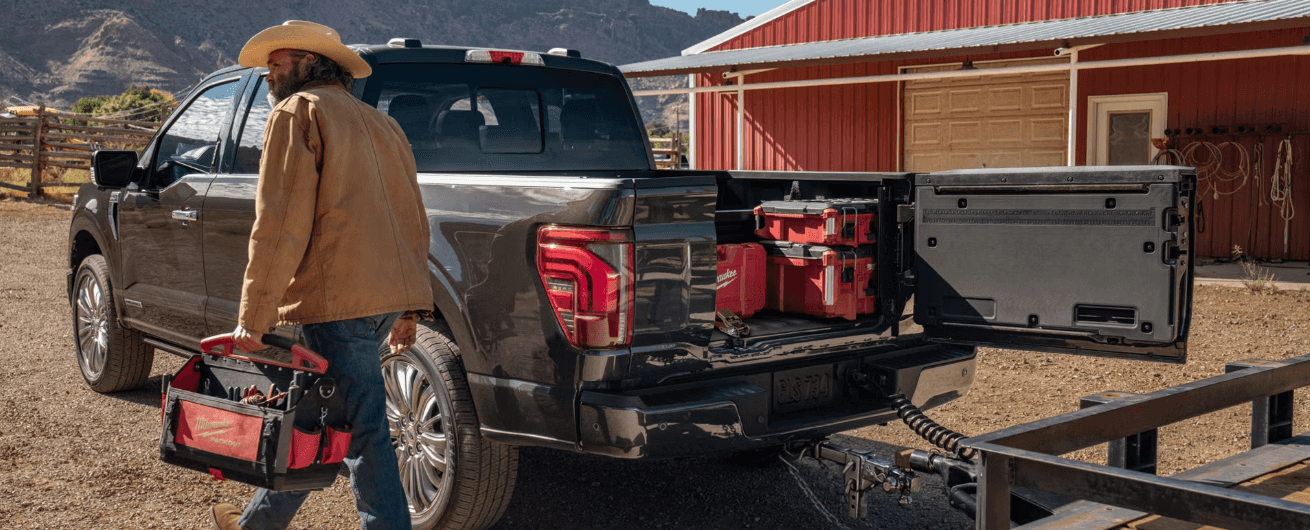
Shop for a New Ford F-150 Near St. Louis
Deciding on the right truck means balancing power, efficiency, and value—areas where both the 2026 Ford F-150 and 2026 Toyota Tundra make strong cases.
A Quick Comparison of the Ford F-150 and Toyota Tundra
The Ford F-150 XL kicks off its lineup with a robust 2.7L EcoBoost V6 delivering 325 horsepower and 400 lb-ft of torque. In contrast, the Toyota Tundra SR begins at a higher price point but offers a potent i-FORCE 3.4L Twin-Turbo V6 with 358 horsepower and 406 lb-ft of torque. This places the Tundra ahead in peak power, though the F-150 offers more affordable entry-level pricing.
When it comes to fuel economy, the two trucks are closely matched. The Ford F-150 XL claims a combined rating of 21 mpg, edging slightly over the Tundra SR’s combined 20 mpg efficiency. Seating arrangements also differ: the F-150 accommodates between three and six passengers depending on trim, providing more flexibility than the Tundra’s fixed five-seat capacity.
Exterior dimensions underscore the F-150’s versatility with lengths ranging from 209.4 to 243.9 inches, narrower width at 79.9 inches, and height between 75 and 79.8 inches. The Tundra is larger, spanning 233.6 to 252.5 inches in length, wider at up to 81.6 inches, and a fixed height of 78 inches, which may affect maneuverability in tighter spaces or urban settings.
How Does the Ford F-150 Perform Compared to the Tundra?
2026 Ford F-150 Powertrain Overview
Power and versatility top the list for buyers who rely on trucks for demanding tasks. The 2026 Ford F-150 stands out with a broad lineup of robust engines, including the base 2.7L EcoBoost V6, that delivers 325 horsepower and 400 lb-ft of torque—specifically on the XL, STX, and XLT. This engine is paired with a 10-speed automatic transmission and offers both rear-wheel drive and four-wheel drive configurations, allowing for adaptability to various driving conditions. The F-150’s capability shines with its blend of power and refined transmission control, optimized for smooth shifting and efficient performance.
2026 Toyota Tundra Powertrain Overview
In contrast, the 2026 Toyota Tundra SR features the i-FORCE 3.4L Twin-Turbo V6, which provides a higher output of 358 horsepower and 406 lb-ft of torque, paired with a 10-speed electronically controlled automatic gearbox. The Tundra is also available in rear-wheel drive and four-wheel drive options. While its power figures are strong, the Tundra’s combined fuel economy rating of 20 mpg slightly trails the F-150’s 21 mpg rating on comparable models, marking Ford’s balance of power and efficiency.
How Much Does the Ford F-150 Tow?
Delving deeper into towing abilities, the Ford F-150 excels with a best-in-class maximum towing capacity of up to 13,500 pounds, which surpasses the Tundra’s maximum of 12,000 pounds found only on select rear-wheel-drive SR5 configurations. This edge gives the F-150 an undeniable advantage for owners who place a premium on maximum towing strength. The F-150 also impresses with a gross vehicle weight rating and curb weights that reflect its versatile construction, ranging from approximately 4,021 to 4,866 pounds depending on configuration, which supports its broad towing and payload capabilities without unnecessary weight.
Does the Ford F-150 Have Towing Technology?
Performance enhancements such as the Ford Co-Pilot360 suite and selectable drive modes, like Tow/Haul and various terrain-specific options, further amplify the F-150’s handling and driving dynamics, optimizing performance on and off-road. Additionally, the F-150 includes advanced features on select trucks like Trail Control and Trail Turn Assist, which support demanding off-road pursuits without sacrificing driveability.
The Toyota Tundra counters with some notable inclusions in its off-road variants, particularly the TRD Pro with FOX internal bypass shocks and 1.1-inch front lift, but its powertrain offerings remain focused around the 3.4L twin-turbo V6 with incremental horsepower gains up to 389 hp in higher trims—still behind Ford’s higher-tier options for horsepower.
2026 Ford F-150 vs. Toyota Tundra: Inside the Trucks
The 2026 Ford F-150 delivers a well-rounded interior environment that focuses on both comfort and cutting-edge technology, setting a benchmark in the category. The cabin accommodates between three to six occupants depending on the cab configuration, offering flexibility ranging from work-focused setups to family-friendly arrangements.
In contrast, the 2026 Toyota Tundra provides fixed seating for five passengers across the lineup, which is more limiting for larger crews or families. This flexibility in the Ford F-150’s seating arrangements allows it to cater effectively to diverse buyer needs.
When it comes to seating materials and comfort, the Ford F-150 entry-level XL includes durable vinyl surfaces ideal for work environments, while those toward the top offer ActiveX seating materials and leather options. Optional features on the F-150 such as heated steering wheels and digitally controlled multi-contour front seats with massaging functions (available on more premium models) highlight commitment to driver and passenger well-being.
Meanwhile, the Tundra SR uses fabric-trimmed seats with manual adjustments, progressing through the lineup to genuine leather-trimmed and heated/ventilated front seats in Limited and higher. While Toyota offers massaging front seats in some variations like 1794 Edition and Capstone, the F-150’s availability of ventilated and heated rear seats in some luxury trims is a distinguishing comfort advantage.
The technology offerings are notable for their consistency across 2026 Ford F-150 trims, with each having:
- 12-inch LCD touchscreen
- SYNC 4 software
- Wireless Apple CarPlay and Android Auto compatibility
- Over-the-air software updates
- 5G Wi-Fi hotspot capability
- 12-inch digital instrument cluster standard on all trucks
Toyota’s Tundra starts with an 8-inch multimedia touchscreen on the SR and increases screen size to 14 inches on higher trims like the Limited, which includes multi-speaker audio systems up to 12 JBL speakers. While Toyota supports wireless smartphone integration as well, Ford’s SYNC 4 system coupled with universal over-the-air updates and 5G connectivity forms a more comprehensive package for users seeking uninterrupted digital access.
Comparing Audio Systems and Convenience Technology
Audio systems differ in standard equipment: the F-150 base models come equipped with an 8-speaker B&O Sound System by Bang & Olufsen, which upgrades to a 14-speaker B&O Unleashed system in premium trims. The Toyota Tundra offers a 6-speaker audio system on base double cab configurations, increasing to a 9 or 12-speaker JBL premium system on higher trims but does not reach the B&O sound systems’ level of standard premium audio integration.
Interior convenience also sets the Ford apart, with features such as:
- Intelligent access with push-button start standard on some trims
- Remote Start system available on upper trims
- Power-adjustable pedal system with memory functions
- Deployable work surface inside the cabin, offering practical workspace versatility.
- Pro Power Onboard transforms the truck bed into a mobile power source — an aspect the Tundra cannot match with its 120V/400W outlets.
Meanwhile, the Toyota Tundra offers some cabin and cargo power outlets but without the extensive onboard power output that Ford provides.
New Ford Specials Near St. Louis
Is the Ford F-150 Reliable?
Yes! Safety and driver assistance technologies are critical factors that distinguish the Ford and Toyota counterparts. Both vehicles come well-equipped but differ in the availability and standardization of key safety features, impacting overall driver confidence and passenger protection.
Starting with the Ford F-150, standard safety equipment on the primary XLT trim includes Ford Co-Pilot360 2.0, a comprehensive suite that features:
- Front-seat side airbags
- Safety canopy side-curtain airbags
- Pre-Collision Assist with Automatic Emergency Braking (AEB)
- Lane-Keeping system
- Blind Spot Information System (BLIS) with Cross-Traffic Alert
- Rear View Camera with Dynamic Hitch Assist
Notably, the F-150 XL also offers many of these essential safety features, reinforcing Ford’s commitment to accessible safety. Optional features like Lane Centering Assist, Adaptive Cruise Control with Stop-and-Go, and Ford’s BlueCruise hands-free highway driving are available in higher trims, alongside a 360-degree camera system to aid maneuvering in tight spaces.
The 2026 Toyota Tundra SR provides a robust safety foundation via Toyota Safety Sense 2.5, including:
- Pre-Collision System with Pedestrian Detection
- Full-Speed Range Dynamic Radar Cruise Control (DRCC)
- Lane Departure Alert with Steering Assist
- Lane Tracing Assist
- Road Sign Assist
- Automatic High Beams
- Blind Spot Monitor (BSM) with Rear Cross-Traffic Alert
- Trailer Merge Warning
- Front and rear parking assist with Automatic Braking
- Panoramic View Monitor
Toyota’s suite excels in active safety technologies but requires upgrading to mid-level trims for advanced driver aids that Ford often includes standard or offers as affordable options.
Key differences emerge in roadside assistance coverage, where the Ford F-150 provides a 5-year/60,000-mile plan, while the Tundra’s coverage spans 2 years/unlimited miles. This disparity benefits Ford owners with longer-term peace of mind. Additionally, the F-150’s availability of BlueCruise technology as a one-time purchase contrasts with Toyota’s focus on multi-level driver assistance packages tied to upgrades.
How Efficient is the Ford F-150 Compared to the Tundra?
The 2026 Ford F-150, especially in its base trim, strikes a commendable balance between power and efficiency with its 2.7L EcoBoost V6 engine achieving a combined fuel economy rating of 21 mpg (19 city / 25 highway).
This contrasts slightly with the 2026 Toyota Tundra SR, which features a 3.4L Twin-Turbo V6 producing a combined 20 mpg (18 city / 24 highway). While the one-mile-per-gallon advantage may seem modest, Ford’s base F-150 also benefits from a wider fuel type acceptance (gasoline), supporting optimal performance across diverse conditions.
How Many Passengers Does the Ford F-150 Seat?
Practicality extends beyond fuel figures, as well. The Ford F-150 offers flexible seating configurations accommodating up to six passengers in several trims, providing extra room for work crews or family, while the Tundra’s SR is limited to five seats.
How Much Space is in the Ford F-150?
Cargo versatility also tips in Ford’s favor, delivering bed volumes ranging from 52.8 to 77.4 cubic feet across its trims, slightly less than the Tundra’s 55.5 to 81.6 cubic feet but paired with innovative features like the Pro Access Tailgate that simplifies loading tasks, especially with trailers attached.
Curb weight factors into fuel efficiency and maneuverability. The F-150 XL weighs between 4,021 and 4,866 pounds, meaning it generally carries less heft than the Tundra SR, which tips the scales at 5,205 pounds. This weight difference contributes to the F-150’s more agile driving feel and further supports its fuel economy edge.
Schedule a Test Drive with the 2026 F-150 near St. Louis
If you’re interested in the new Ford F-150, schedule a test drive with us. Take a look at our other Ford model comparisons and if you have any questions, contact us!
0 comment(s) so far on Choose the Ideal Truck: 2026 Ford F-150 vs. 2026 Toyota Tundra