Full-size truck shoppers naturally weigh the F-150 against other trucks on the market before making a decision, and the right comparison makes that decision easier. The Ford F-150 stacks up against competing full-size trucks on the factors that matter most: engine variety, towing and payload capability, trim selection, and cab configuration. Drivers around St. Louis and Collinsville commonly cross-shop the F-150 against rivals from RAM, Chevrolet, and Toyota, along with Ford’s own heavy-duty Super Duty® lineup. Each comparison below breaks down how the current F-150 measures up on these categories, with year-specific pages available for exact pricing and specs.
The F-150 offers one of the broader engine lineups in its class, ranging from an efficient turbocharged V6 to a high-output V8 and a full hybrid option. That range lets buyers match a powertrain to how they actually use the truck, whether that means daily commuting, job-site hauling, or weekend towing. Competing trucks typically offer fewer engine choices, which narrows the options for buyers who want a specific balance of power and efficiency.
Towing and payload capability is another area where comparisons matter. Buyers who tow trailers, boats, or equipment around Edwardsville want to know a truck can handle the job without approaching its limits. The F-150’s available configurations are built to provide margin for those tasks, and the comparison guides below outline how that capability stacks up against specific rivals for a given model year.
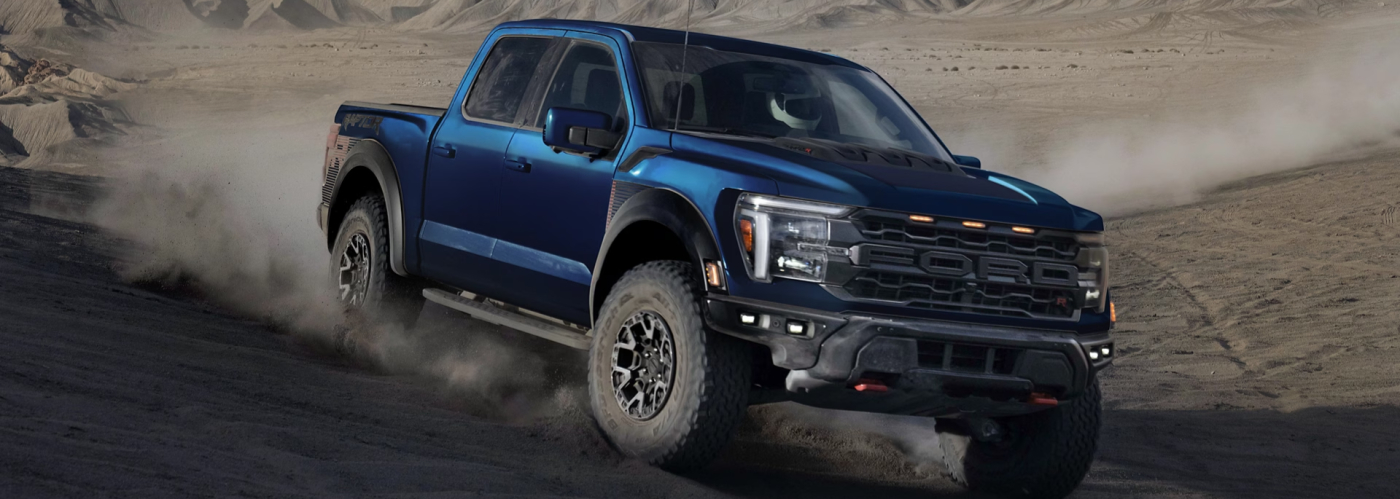
Trim selection plays a big role in how a truck comparison shakes out. The F-150 lineup spans work-focused trims built for durability through off-road-focused models like Raptor® and Tremor®, giving buyers a wider range of configurations to weigh than some competitors offer. Trim availability differs by model year, so the year-specific guides below break down exactly which trims are offered side-by-side with a given rival.
Cab and bed configuration matter just as much as power on paper for buyers near St. Louis. A truck that tows well but doesn’t fit a family or crew comfortably isn’t the right fit for most drivers. Both the F-150 and competing trucks offer multiple cab styles and bed lengths, and the guides below cover how those configurations compare so buyers can weigh seating and cargo space alongside performance.
F-150 vs. RAM 1500
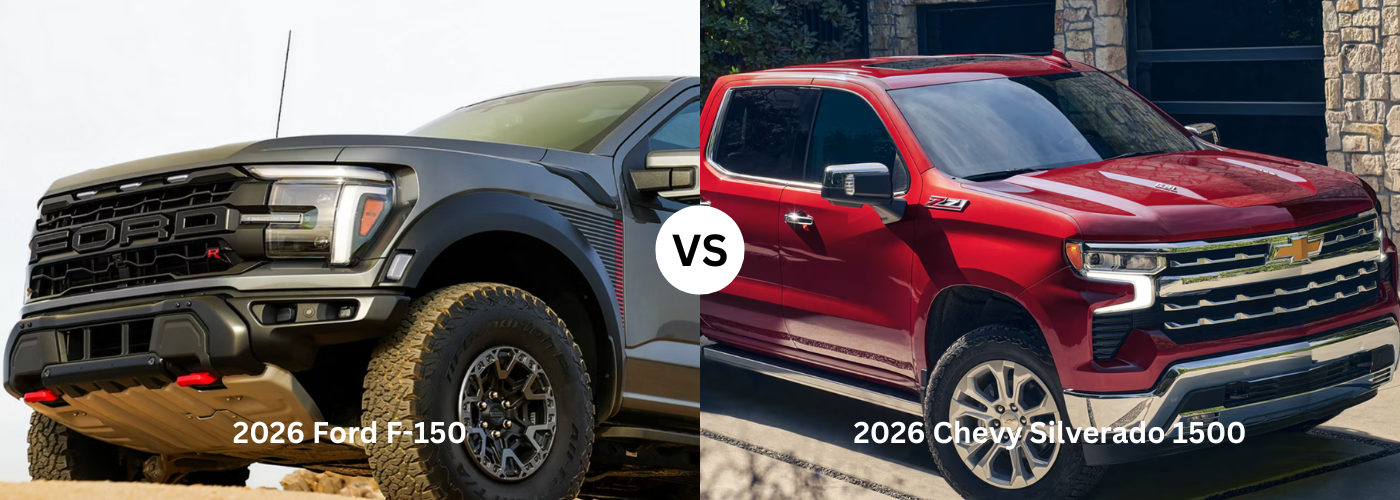
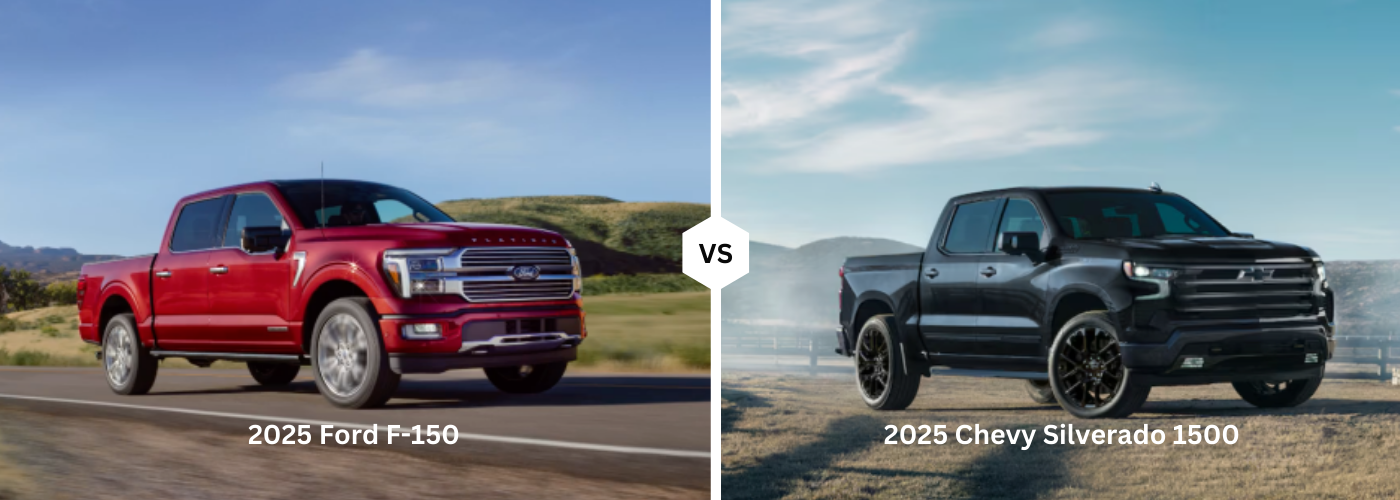
F-150 vs. Chevy Silverado 1500
F-150 vs. Toyota Tundra
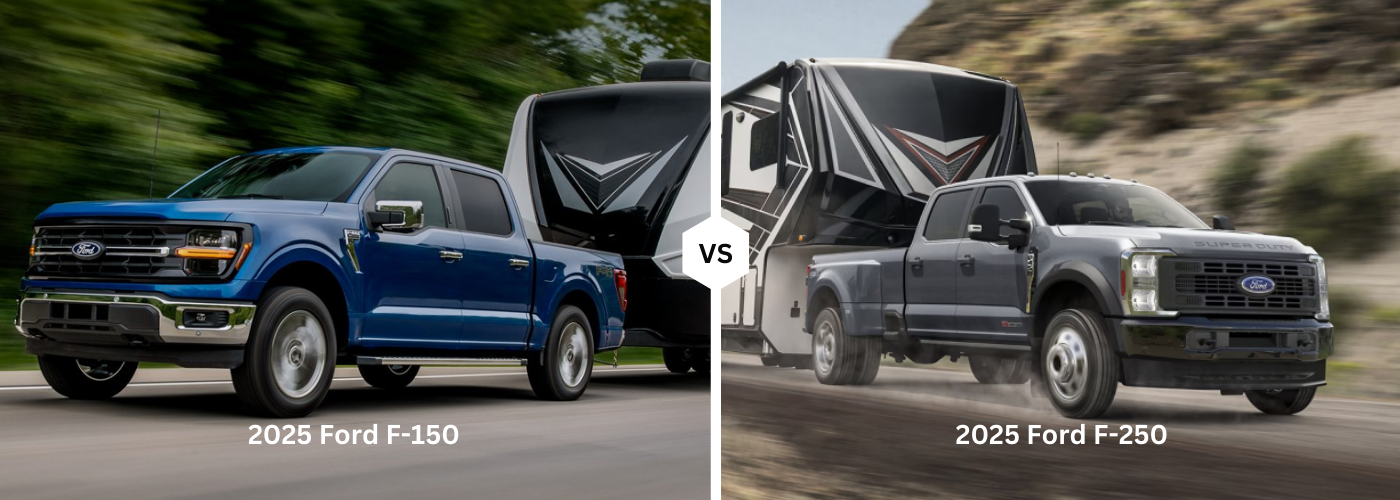
F-150 vs. Ford F-250
The F-150 generally offers a broader range of engine options, including a full hybrid, along with higher maximum towing and payload capability across most trim levels. Exact figures vary by model year, so check the year-specific comparison for full details.
The F-150 typically edges out the Silverado 1500 in maximum towing and payload capacity, though both trucks offer strong capability depending on configuration. See the year-specific guide for exact ratings.
The F-150 offers a wider range of engine options than the Tundra, including multiple V6, V8, and hybrid choices. Towing and payload capacity also tend to favor the F-150, though buyers should compare specific trims for an apples-to-apples look.
The F-150 is a light-duty truck built for everyday driving and moderate towing, while the F-250 is part of Ford’s heavy-duty Super Duty® lineup with higher towing and payload ceilings. Buyers who tow heavier trailers regularly typically look to the F-250.
That depends on priorities — the RAM 1500 and Silverado 1500 are the most common cross-shops for buyers focused on towing and trim variety, while the Toyota Tundra is a common comparison for buyers considering a non-domestic brand. Each comparison guide below breaks down the details.
Ready to see how the F-150 measures up in person? Visit Weber Ford near Collinsville to compare trims, take a test drive, and get real answers to your truck-shopping questions. Call our sales team at 618-452-5400 to schedule a visit.